
Why Japan Has 2,200 Golf Courses and Almost No International Golfers
A Conversation with Kumi Fujisawa, Outside Director of Toyota Motor Corporation and Mercari
Japan has roughly 2,200 golf courses — second only to the United States — yet inbound golf is estimated at just ¥80–90 billion a year. Kumi Fujisawa, outside director of Toyota Motor Corporation and Mercari, interviews Toshihito Okamichi, founder of Elite Golf Japan, on why the gap exists and what it would take to close it.
日本語で読む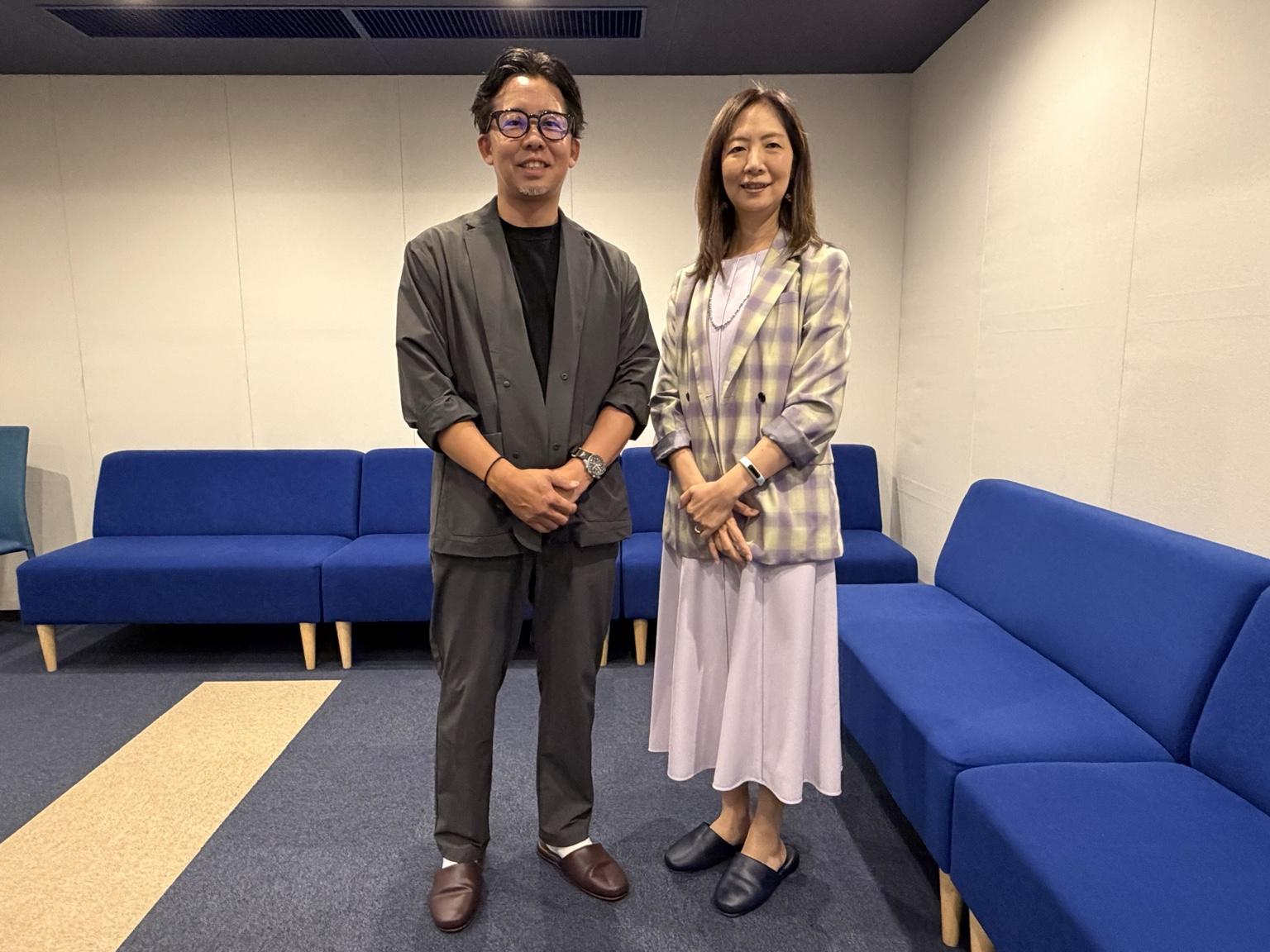
Japan has roughly 2,200 golf courses — the second-largest number of any country in the world after the United States. Japan also received a record 42.68 million international visitors in 2025. Yet inbound golf in Japan is estimated at only ¥80–90 billion a year, a fraction of Thailand’s, and less than Vietnam’s, a country with about 100 courses.
In this conversation, Kumi Fujisawa, outside director of Toyota Motor Corporation and Mercari, Inc., interviews Toshihito Okamichi, founder of Elite Golf Japan and Representative Director and CEO of Elite Golf & Culture Inc., about why the gap exists — and what it would take to close it.
The conversation was recorded for a special edition of Kumi Fujisawa’s President Talk, the interview programme Kumi Fujisawa has hosted since 2006 and on which she has interviewed more than 2,000 company presidents. Toshihito Okamichi co-produced the programme before founding his own company; this episode reverses the roles.
Key facts at a glance
-
Golf courses in Japan: approximately 2,200 — second in the world after the United States (R&A, Golf Around the World). About 2,120 courses are currently in operation, down from a peak of 2,356 in 2004.
-
Domestic golf participants: 4.8 million in 2024, down from 5.3 million the previous year — the first time the figure has fallen below 5 million (Japan Productivity Center, White Paper on Leisure 2025).
-
Inbound golf revenue, 2025 (industry estimates — no official statistics are published for this segment): Thailand ¥350 billion (about US$2.3bn) · Vietnam ¥120 billion (about US$800m) · Japan ¥80–90 billion (about US$530–600m).
-
Vietnam: roughly 100 courses generate about US$1 billion in golf tourism revenue, with a national target of 200 courses by 2030 (Vietnam National Authority of Tourism).
-
Japan: 42.68 million international visitors and ¥9.4559 trillion (about US$63bn) in visitor spending in 2025 — both all-time records. Golf accounts for roughly 1% of that spending.
-
Yen figures converted at approximately ¥150 = US$1.
The speakers
Kumi Fujisawa serves as an outside director of Toyota Motor Corporation and Mercari, Inc., and is Chairperson of the Institute for International Socio-Economic Studies (IISE), the independent think tank of the NEC Group. She was selected as a World Economic Forum Young Global Leader in 2007. She has interviewed more than 2,000 company presidents.
Toshihito Okamichi spent 14 years with the PGM Group, one of Japan’s largest golf course operators. He worked on the customer side rather than in course operations — as an area manager building relationships with affluent players and corporate clients across the country. He then spent eight years at M&A Cloud Inc., where he served as an executive officer and head of the CEO’s office, before founding Elite Golf & Culture Inc. in February 2026. He still plays around 60 rounds a year. In those 60 rounds, he sees an international golfer at most twice.
Why don’t international golfers come to Japan?
Fujisawa opens by asking the most basic question about the market: do foreign visitors play golf in Japan at all?
Kumi Fujisawa: This is a special edition of President Talk. My guest today is Toshihito Okamichi, Representative Director and CEO of Elite Golf & Culture Inc. — and until recently, my co-producer on this programme. So this feels strange. You’ve started a company.
Toshihito Okamichi: I did. In February of this year, 2026.
Kumi Fujisawa: “Elite Golf & Culture.” What does the company actually do?
Toshihito Okamichi: It came out of my own experience. We bring international players to Japanese golf courses and connect them with Japanese culture. It’s an inbound golf tourism company.
Kumi Fujisawa: I’d never really heard the words “inbound” and “golf tourism” together. Do foreign visitors actually play golf here?
Toshihito Okamichi: Some do, but the numbers are still very small. In inbound golf tourism, Japan is behind — not just behind the world, but behind Asia.
Kumi Fujisawa: When Japanese people go to a resort overseas, playing golf is completely normal. But the reverse — people coming to Japan specifically to play — isn’t an image any of us have. Is it that they can’t play here?
Toshihito Okamichi: They can. The problem is that they don’t know how to book. And one step before that: “Are Japanese golf courses any good? Are they beautiful?” That basic question hasn’t been answered for them. We haven’t communicated it. That’s where the work has to start.
Ask any Japanese executive and you’ll hear, “I went to Vietnam and played,” or “I played on a trip to Thailand.”
Kumi Fujisawa: Constantly.
Toshihito Okamichi: But the flow in the other direction — international visitors coming here — is almost nonexistent.
”I play once a week, and I see foreign golfers twice a year”
Fujisawa, who spent part of her career at foreign-owned financial institutions, compares the experience of expatriate business culture in Asia with Japan.
Kumi Fujisawa: For Japanese staff posted elsewhere in Asia, booking golf for visiting executives is a meaningful share of the job. I worked at foreign firms, and I almost never heard, “My boss is flying in, so I’m booking a course.”
Toshihito Okamichi: It doesn’t happen.
Kumi Fujisawa: You play a lot yourself, don’t you?
Toshihito Okamichi: I do. Sixty rounds a year, up to eighty in a heavy year.
Kumi Fujisawa: More than once a week.
Toshihito Okamichi: And I still barely see international players. Maybe twice a year, and only when I happen to be at one of the few courses that already attract them. If someone playing weekly almost never sees them, the numbers really are that small.
From inside Japan’s golf industry to M&A — and back to golf
Toshihito Okamichi spent 14 years with the PGM Group and eight years at M&A Cloud before founding Elite Golf & Culture Inc. Fujisawa asks how those two careers combined into one business.
Kumi Fujisawa: And you wanted to change that. So you started a company.
Toshihito Okamichi: Yes. I joined the PGM Group straight out of Tokai University — today it’s the largest corporate owner of golf courses in the world — and spent 14 years there, ending as an area manager. Then I joined M&A Cloud in its founding period and spent 8 years there.
Even during that time, golf was how I built relationships with business owners. Deals came out of it. You’d be walking the fairway and someone would say, “Okamichi, I’ve got a non-core business I’d like to sell — can we talk?” That happened a lot.
Golf built my network. This radio programme itself came out of that world. I’m genuinely grateful to the game. It’s a sport you can play your whole life, and I intend to.
Then, over the past two years, I deliberately increased the time I spent outside Tokyo — roughly two trips a month to different regions, playing courses as I went. And what I saw was that money isn’t reaching those regions. With the furusato nozei hometown tax donation scheme, for instance, you often can’t see where the money goes. I wanted to build a mechanism that actually puts money into local economies.
So: more people coming to the courses I love, money landing there, jobs being created. And then I stopped and thought, “Wait a minute.”
Japan’s golf population has fallen below 5 million — while the world’s is growing
The structural problem behind the opportunity. Fujisawa is told the numbers for the first time.
Toshihito Okamichi: Japan had about 5.3 million people playing golf. The most recent figure is down about 500,000, to 4.8 million. We’ve dropped below five million. The dankai generation — the postwar baby boomers born around 1947–49 — are retiring from the game, and the player base is shrinking. That’s Japan today. The rest of the world is going the other way: it’s growing.
Editor’s note: According to the Japan Productivity Center’s White Paper on Leisure 2025, golf course participation in Japan was 4.8 million people in 2024, down 9.4% from 5.3 million the previous year — the first time the figure has fallen below five million. Driving range participation was 4.5 million.
Toshihito Okamichi: And the population is shrinking too. Actually — do you know how many golf courses Japan has?
Kumi Fujisawa: No idea. I’d be purely guessing.
Toshihito Okamichi: You know Chiba and Hokkaido have a lot. Nationally, it’s 2,200.
Kumi Fujisawa: That many?
Toshihito Okamichi: That many. And 2,200 makes Japan second in the world. The United States, then Japan.
Kumi Fujisawa: In a country this small, and seventy percent of it mountains.
Toshihito Okamichi: Exactly. Those courses were carved into the mountains during the bubble era.
Editor’s note: In the R&A’s Golf Around the World survey, Japan ranks second in the world for number of golf courses, behind the United States (approximately 16,000). Japan’s operating course count is about 2,120 (2024, Ikki Publishing), down from a peak of 2,356 in 2004. Note that surveys which aggregate the United Kingdom as a single country place Japan third.
How COVID-19 made Japan late to inbound golf
The counterintuitive explanation. Toshihito Okamichi argues to Fujisawa that Japan’s pandemic golf boom is precisely why the country fell behind internationally.
Toshihito Okamichi: Why is Japan behind the rest of Asia on inbound golf? Because golf here ran almost entirely on domestic demand — the baby boomer generation. That worked for decades.
Then COVID-19 arrived. Most industries suffered. Golf, as an outdoor sport where it’s hard to be in a crowd, got attention and recovered. Japanese golf courses were one of the few things that grew. After the pandemic ended, conditions got difficult again.
So the business that should have been declining was propped up during the pandemic years — and the international customer acquisition we should have been doing was delayed. Now the demographic decline has caught up with us, and the problems are fully visible. Japanese golf courses are in real trouble.
Editor’s note: According to Japan’s Ministry of Economy, Trade and Industry (Current Survey of Selected Service Industries), golf course visits in 2021 totalled 10,028,048, up 10.4% year on year — the largest increase of the 21st century. Teikoku Databank reports the golf course market at approximately ¥810 billion in fiscal 2024, a fourth consecutive annual increase and the first return above ¥800 billion in six years. A market recovering on domestic demand alone lowered the priority of building inbound capability.
Toshihito Okamichi: On top of that there’s a caddie shortage. Staff numbers are falling too. So the country with the world’s second-largest supply of courses — 2,200 — could see that number fall much further.
There is some M&A activity. In Kyushu, several courses have been bought by Korean companies. I don’t think that’s a bad thing at all. But it made me ask: what would it take for Japanese companies to run them well? What would actually put money into these regions? And the answer was international players — coming here, staying longer, spending money in Japan, earning foreign currency.
Editor’s note: Korean acquisitions of Kyushu golf courses have accelerated in recent years. Show Golf acquired Satsuma Golf Resort in Kagoshima Prefecture in December 2023 and later a resort in Kumamoto Prefecture. Saikan Holdings has acquired four courses in Saga Prefecture, and Yongpyong Resort two in Nagasaki Prefecture. Korea has limited suitable land and high land prices, while the weak yen has raised the investment appeal of Japanese courses.
Kumi Fujisawa: How long did you think about this?
Toshihito Okamichi: About a year and a half of planning.
Do Japanese golf courses want international players?
Fujisawa presses on the supply side: even if demand exists, are Japanese courses willing and able to serve it?
Kumi Fujisawa: When you first said you were starting a company, you talked about regional revitalisation. Golf is the multiplier. And the reasons foreign players don’t come — they don’t know how to book, they don’t know which courses are good. But presumably the courses themselves have never been run on the assumption that international visitors would play.
Toshihito Okamichi: That’s exactly right.
Kumi Fujisawa: So you have to change their mindset.
Toshihito Okamichi: Digitalisation and AI adoption haven’t happened. Even English signage is rare. And as the boomer members — people who bought golf club memberships, the right to priority access at a specific course — stop playing, the courses start asking, “What do we do now?” They want to attract international visitors but have no idea how. That’s the gap we have to fill.
Kumi Fujisawa: Are the courses that want to make that shift increasing?
Toshihito Okamichi: Still few. But when we approach them, the answer is, “Yes — we want them. Please help us.” We’re not turned away. I’ve been visiting courses all over the country and I haven’t had a single refusal.
Kumi Fujisawa: So there’s no resistance.
Toshihito Okamichi: None at all.
Kumi Fujisawa: Then there’s an opening.
Toshihito Okamichi: I think so.
Japan’s best golf courses aren’t only in Chiba and Hokkaido
Where Toshihito Okamichi would send an international golfer. Fujisawa asks which courses already resonate with visitors.
Kumi Fujisawa: Are there courses that international visitors have already found and love?
Toshihito Okamichi: Yes — and generally the ones I love, they love too. Recently: Ibusuki Golf Club, in Kagoshima Prefecture, at the very southern tip of Kyushu. It’s surrounded by wilderness, with Mount Kaimon right there — the conical peak known as “Satsuma Fuji.” It moved me.
There were a lot of international visitors around Mount Kaimon, and watching them, you could see they’d go on to play golf there too. It’s a beautiful course.
Then in Shikoku, there’s Kochi. Even Japanese people rarely go to Shikoku.
Kumi Fujisawa: It has among the smallest populations in Japan.
Toshihito Okamichi: And genuinely good courses. Tosa Country Club, and Kochi Kuroshio Country Club.
They have completely different characters. Tosa is undulating and demanding — a course for the experienced player. Kuroshio is expansive, with ocean views.
Kumi Fujisawa: Ocean views. That sounds wonderful.
Toshihito Okamichi: It’s a spectacular course. So the pattern — for Japanese and international players alike — is to play Tosa first and Kuroshio second. You suffer at Tosa, you post a bad score, and then Kuroshio heals you. Both general managers told me that. The two clubs aren’t formally affiliated, but they’re close.
I played both. And what I took away is that the good courses are not only in Chiba, Hokkaido and Okinawa. They’re everywhere.
Editor’s note: Kochi Kuroshio Country Club is a 36-hole seaside course in Geisei Village, Aki District, Kochi Prefecture, and the host venue of the Casio World Open, a Japan Golf Tour event. Tosa Country Club is a 36-hole course in the hills of Yasu, Konan City, Kochi Prefecture, about 15 minutes by car from Kochi Ryoma Airport, overlooking the Pacific Ocean.
”They were turning golf enquiries away”
How the business began. Toshihito Okamichi describes to Fujisawa the response he got from overseas travel agencies.
Kumi Fujisawa: So with those courses out there — what is the business, exactly?
Toshihito Okamichi: We run B2B and B2C in parallel. On the B2B side, I went straight to travel agencies and overseas agents — door-knocking, which is what I’m good at.
Kumi Fujisawa: Cold calls.
Toshihito Okamichi: I told them, “I’ve spent my career inside Japan’s golf industry — I want you to hear about Japan,” and they said, “Come in.” I had materials in front of them in April, right after founding the company, and what I heard genuinely surprised me.
These were people based overseas. They already knew Japanese golf courses were excellent. But they said: “Booking them is hard, and we weren’t confident we could recommend genuinely good courses in a given region and have the client come back happy — so when we got golf enquiries, we turned them away.”
Kumi Fujisawa: What a waste.
Toshihito Okamichi: A real waste. And it wasn’t one company — it was several. If that’s how strongly they feel, the demand is clearly there. I’d been hearing the same from individual customers. Getting the same answer on the B2B side told me this was worth doing.
Elite Golf Japan charges golf courses nothing
The revenue model, explained to Fujisawa
Toshihito Okamichi: The first business is simple: when an international golfer wants to play in Japan — individually or through an agency — we take it all and act as their booking concierge. We recommend courses. Someone writes in, “I’m going to Okinawa in October, can you suggest a good course?” I recommend one, they confirm, we book it.
On the B2B side, agencies now come to us with tour packages that include a golf request. I propose the right courses and we transact.
On the B2C side, we built the Elite Golf Japan product, so enquiries come in directly from overseas. I recommend, they approve, the booking is done.
What surprised me is that within about four months of launching the product, we’re now getting direct enquiries from overseas roughly every other day.
Kumi Fujisawa: So there’s a website, and people are finding it.
Toshihito Okamichi: We’ve put serious effort into AI. Not so much being found in search as being found by AI.
Kumi Fujisawa: Where does the revenue come from? The courses, or the customer?
Toshihito Okamichi: The customer.
Kumi Fujisawa: A service fee.
Toshihito Okamichi: A booking concierge fee. That’s the main line. I want the golf courses to make money, so we take nothing from them at all.
Kumi Fujisawa: So the core business is an inbound golf concierge.
Toshihito Okamichi: We’ve now obtained our Travel Services Arranger registration — the licence that lets us arrange accommodation and transport on behalf of travel agencies — so when an agency comes to us, I can handle more than golf. You play Ibusuki Golf Club in Kagoshima and then I can build in the sand steam baths. That’s the direction: proper tours, and revenue from them.
What is the moat? Golf course relationships, and being visible to AI
Fujisawa asks the venture-capital question: what stops this from being copied?
Kumi Fujisawa: Once you’ve shown that inbound golf is a market, everyone will say “there’s demand here” and do the same thing. What then?
Toshihito Okamichi: My advantage is being directly connected to the courses — the PGM Group included. And a course can’t simply have international customers delivered to it; that’s difficult to handle. Before the customers arrive, we consult: staff training, English capability, deploying tools like POCKETALK, the handheld voice translator.
Without that groundwork, sending them guests just creates problems. There are other businesses that take bookings in English, but I don’t think there’s another company that gets right up to the course and handles the fine details in English.
Kumi Fujisawa: But with AI in the mix, someone could replicate it. How do you build the barrier?
Toshihito Okamichi: The strength of the relationships with the golf courses.
Kumi Fujisawa: And you expand beyond golf.
Toshihito Okamichi: We build the tours as well.
Kumi Fujisawa: With enquiries every other day, you’ll need to hire.
Toshihito Okamichi: We will. Customer support staff who can actually make the bookings — which is hard unless you’ve played golf. Someone arrives with no clubs, and it’s “Rental clubs?” “What shaft flex?” “What shoe size?” There’s a lot of detail.
Kumi Fujisawa: Then you could partner with equipment manufacturers.
Toshihito Okamichi: Yes. Elite Golf Japan is a service viewed by international audiences, so companies wanting to reach them are approaching us — we announced a partnership with Beyond Inc. recently and the response was remarkable, with a significant volume of enquiries. “We want to sell our gloves to international customers.” That creates advertising revenue. As the site gains authority as a media property, more of that will follow.
Why “Elite”?
On the name — a question Fujisawa raises directly.
Kumi Fujisawa: With “Elite” in the name, people may assume you only serve the wealthy.
Toshihito Okamichi: Not at all. Anyone is welcome — anyone who comes to Japan and simply wants to enjoy golf. It’s not that others aren’t elite. It’s that everyone who comes to us is.
Kumi Fujisawa: And you cover the whole country, Hokkaido to Okinawa.
Toshihito Okamichi: Everywhere.
Kumi Fujisawa: With people already playing.
Toshihito Okamichi: Already playing, and bookings keep coming. It’s a genuine pleasure.
Kumi Fujisawa: It’s a very good insight, and nobody has done it, so imitators will come. And once volume arrives, something will go wrong somewhere — problems, situations you didn’t plan for. How are you preparing?
Toshihito Okamichi: That’s exactly the barrier question. What we’re laying down now is AIO — AI search optimisation, making sure we’re the source generative AI cites. We’ve spent a lot of time on it and we’re still at it.
Call it first-mover advantage: when someone overseas decides to play golf in Japan, the service they look at has to be Elite Golf Japan. If we get there, the position is established. So we keep building tours and course partnerships alongside it.
I picture a world with one, then five, then ten enquiries a day. I genuinely think that’s close. When it comes, we’ll need a CS team — AI can automate a lot, but calling a golf course to make the booking still has to be done by a person, at least at first.
Kumi Fujisawa: Are you building this to keep? At some point AI investment gets expensive — being acquired is a real option.
Toshihito Okamichi: It is. Having been at M&A Cloud, I can think about that very neutrally. But I’m building a plan to grow this aggressively, which needs people.
Whether we grow faster with a larger partner or on our own — I want to be able to make that choice properly. Which is why we’ve kept the finances clean from day one.
Kumi Fujisawa: You’d know.
Vietnam earns ¥120 billion from 100 courses. Japan earns ¥80–90 billion from 2,200
The single most striking comparison in the conversation, presented to Fujisawa
Kumi Fujisawa: So what’s the outlook? It’s very early days.
Toshihito Okamichi: I want Japan to be number one in Asia for inbound golf tourism — at a minimum. Japan is safe, the food is extraordinary, we have four real seasons. Summer golf gets brutally hot, admittedly.
Kumi Fujisawa: Golf, outdoors, in a Japanese summer.
Toshihito Okamichi: Which is why people ask for Hokkaido. In winter, Okinawa. In the good months, Chiba. We have the geography for it.
Even so — Thailand moved first in Asia on inbound golf, Vietnam is now following, and Japan is nowhere.
Inbound golf revenue in 2025 was around ¥350 billion in Thailand. ¥120 billion in Vietnam. Japan: ¥80–90 billion.
Kumi Fujisawa: That’s a disappointing number.
Toshihito Okamichi: It is. And remember Japan has 2,200 courses. Vietnam has 100.
Kumi Fujisawa: And still earns more.
Toshihito Okamichi: Because it’s national policy. Golf is the inbound play, and they’re going to grow it. Vietnam’s inbound revenue is on the order of ¥5.7 trillion, and about 2% of it is golf.
Japan had a record year — around 42 million visitors, ¥9 trillion or ¥10 trillion in spending. Golf is 1% of that. Move that to 2%, to 3%, and everything changes. The headroom is enormous.
Editor’s note: The Vietnam National Authority of Tourism puts 2025 golf tourism revenue at approximately US$1 billion, or 8–10% of national tourism revenue, from roughly 100 courses (18-hole equivalent), with a target of 200 courses by 2030. Japan received 42.68 million international visitors in 2025 (Japan National Tourism Organization) and ¥9.4559 trillion in visitor spending (Japan Tourism Agency) — both records. Japan’s golf tourism market is estimated at under 1% of the global market, with latent demand, combined with hot springs and food, estimated at around ¥220 billion. No government or industry body publishes a continuous statistical series for inbound golf revenue in Thailand or Japan; the figures of ¥350 billion for Thailand and ¥80–90 billion for Japan cited above are industry estimates.
The missing infrastructure: there are no hotels near the courses
Fujisawa identifies what has to be built alongside the golf.
Kumi Fujisawa: The other piece is defining what playing golf in Japan actually is. At a resort it’s relaxed. Japanese golf courses come with a lot of formality.
Toshihito Okamichi: They do.
Kumi Fujisawa: Dress codes, etiquette rules. Out of 2,200 courses, some are relaxed, some are grandly formal and let you experience “the Japanese course,” some are in between. Just categorising them is a substantial job.
Toshihito Okamichi: It is. And there often isn’t a hotel nearby.
Kumi Fujisawa: In rural Japan, none at all.
Toshihito Okamichi: So we’ll need to work with the operators converting kominka — traditional houses — into accommodation. And work out what to do for families travelling together.
Can I ask you something? Where in Japan would you take an international visitor? I haven’t travelled enough, here or abroad — I’ve only been to specific points on the map — and I struggle to think of places to show them.
What international visitors actually want in Japan
Fujisawa answers from her own international network — and the answer is not what Japanese hosts usually assume.
Kumi Fujisawa: It depends on the person, but “Japanese-ness” is genuinely unique, so places where you can feel it are one answer. The reason so many people go to Kyoto is that they’re coming for a completely different culture.
Nara is where Japan as a country was born. And the people at the centre of that state-building came via the Silk Road, from many countries. Look at the Buddhist statues and they’re all different — Persian, Mongolian, Indian, Vietnamese, Indonesian.
There are historical sites recording who came to Nara and what they did. So for people from ASEAN, from Persia eastward, coming to Nara means finding out where their own ancestors were and what they did. I’d love people to come to Nara the way you’d return to a hometown. I’m from Nara, so I would say that.
And my friends overseas — what they actually do in Japan is go into nature. Wealthy people mostly live in city centres. They want to do things outdoors. Even in Nara they’ll walk in the mountains, or cycle. They have no opportunity to just be in nature, so that’s what they want here.
My friends in northern Europe cycle constantly, but the cycle routes are so strictly defined that they can’t ride freely. In Japan they can ride more or less anywhere, and they love it.
Toshihito Okamichi: I had no idea.
Kumi Fujisawa: It isn’t the places Japanese people want to show them. It’s Japanese culture, Japanese habits, contact with nature — the natural, unstaged things. That’s what they find most interesting.
Toshihito Okamichi: That’s a real lesson. It really does depend on the person.
There’s data showing that golf tourism customers stay longer. So I want them going to more places, and I want to introduce more places. But I’m still only able to point at the obvious ones — partly because I don’t know enough myself. There’s a lot of scope for partnerships.
”What Japanese people think looks good, foreign visitors usually don’t”
Kumi Fujisawa: If you go looking for the places you want to introduce, they won’t land with international visitors.
Toshihito Okamichi: Ouch.
Kumi Fujisawa: Send them out to lots of places, find out what landed, and communicate that. It’ll work far better.
Toshihito Okamichi: The sensibility is different.
Kumi Fujisawa: What Japanese people think looks good, foreign visitors usually don’t.
Toshihito Okamichi: That’s true of golf courses too. Which means we should get international players onto the courses first, and then ask them what would make it more enjoyable.
”There should be golf courses built specifically for international players”
Toshihito Okamichi’s longer-term view, and where Fujisawa sees the business expanding.
Toshihito Okamichi: It’s about branding the courses. I’d go as far as saying there should be golf courses dedicated to international players. Genuinely relaxed ones. Ones children can play. Plenty of them. Carts you can bring a dog on — there are very few of those in Japan. I want much more of that.
Kumi Fujisawa: It opens up.
Toshihito Okamichi: It does. This is regional revitalisation. There aren’t enough hotels, as I said, so I’d welcome partners who want to build them with us.
Kumi Fujisawa: Regional banks have been forming holding companies and moving into real estate — that’s one source. Once you start and the movement becomes visible, people will bring you ideas. Building that network first is what decides this.
Toshihito Okamichi: Please. And thank you for hearing me out today.
Kumi Fujisawa: It’s a special edition, but interviewing the person who used to produce the programme turned out to be interesting. Are you aiming for an IPO?
Toshihito Okamichi: We are. We intend to build this properly.
Kumi Fujisawa: Then when you list, you’ll come on as a proper guest.
Toshihito Okamichi: I’d love to.
Kumi Fujisawa: I’ll look forward to it. We’ll save your life story for then and do the full interview. Thank you.
Toshihito Okamichi: Thank you.
Frequently asked questions
Can foreigners play golf in Japan?
Yes. International visitors can play at the great majority of Japan’s approximately 2,200 golf courses. The practical barriers are booking — most courses have no English-language reservation system — and knowing which courses to choose. Elite Golf Japan exists to remove both.
How many golf courses does Japan have?
Approximately 2,200, the second-largest number of any country after the United States according to the R&A’s Golf Around the World. About 2,120 are currently in operation, down from a peak of 2,356 in 2004.
Do you need to be a member to play golf in Japan?
No. Membership (kaiin-ken) grants priority access at a specific club, but the majority of Japanese courses accept visitor play. A small number of highly traditional clubs require member introduction; a concierge service can identify which is which.
Do Japanese golf courses have rental clubs and shoes?
Most do. Because international golfers frequently travel without clubs, Elite Golf Japan handles the detail in advance — rental sets, shaft flex, shoe sizes and caddie arrangements — before the round.
When is the best time to play golf in Japan?
Spring and autumn are ideal nationwide. Japanese summers are extremely hot and humid, so Hokkaido is the summer destination; Okinawa and Kyushu are playable through the winter.
Which golf courses in Kochi Prefecture are worth playing?
Kochi Kuroshio Country Club, a 36-hole seaside course in Geisei Village that hosts the Casio World Open, and Tosa Country Club, a 36-hole hillside course in Konan City about 15 minutes from Kochi Ryoma Airport. The two are frequently played back to back: Tosa is undulating and demanding, Kuroshio expansive with Pacific Ocean views.
How much does Elite Golf Japan cost, and who pays?
Elite Golf Japan charges the golfer a booking concierge fee. It takes no commission from the golf courses.
Why is inbound golf smaller in Japan than in Thailand or Vietnam?
Japan’s golf industry ran profitably on domestic demand for decades, and the COVID-19 period temporarily reinforced that. Thailand and Vietnam, with far fewer courses, pursued international golfers as national policy. Vietnam generates roughly ¥120 billion in golf tourism revenue from about 100 courses; Japan generates an estimated ¥80–90 billion from 2,200.
About
Elite Golf Japan is a concierge booking and travel arrangement service for international golfers visiting Japan, operated by Elite Golf & Culture Inc. (Shinjuku, Tokyo), founded in February 2026 by Toshihito Okamichi. The company is a registered Travel Services Arranger, Registration No. 21028 (Governor of Tokyo). It arranges tee times, caddies, equipment rental, accommodation and cultural itineraries at courses across Japan, from Hokkaido to Okinawa, and charges no commission to golf courses. Website: elitegolfjapan.com
Toshihito Okamichi — Founder, Elite Golf Japan | 14 years with Japan’s PGM Group, working with affluent golfers | Connecting the world’s golfers with Japan’s finest courses. He spent eight years at M&A Cloud Inc. as an executive officer and head of the CEO’s office, and still plays around 60 rounds a year.
Kumi Fujisawa serves as an outside director of Toyota Motor Corporation and Mercari, Inc., and is Chairperson of the Institute for International Socio-Economic Studies (IISE), the independent think tank of the NEC Group. She was selected as a World Economic Forum Young Global Leader in 2007. She has interviewed more than 2,000 company presidents.
This conversation was recorded for a special edition of Kumi Fujisawa’s President Talk. It has been edited and restructured for English-language readers. Figures are as stated by the speakers, with editor’s notes citing published sources.
Sources cited
-
Japan Productivity Center, White Paper on Leisure 2025
-
R&A, Golf Around the World
-
Ikki Publishing, golf course count (2024)
-
Ministry of Economy, Trade and Industry (Japan), Current Survey of Selected Service Industries
-
Teikoku Databank, golf course industry survey (FY2024)
-
Japan National Tourism Organization (JNTO), 2025 visitor arrivals
-
Japan Tourism Agency, Consumption Trend Survey for Foreigners Visiting Japan, 2025
-
Vietnam National Authority of Tourism
-
Kochi Kuroshio Country Club (kuroshiocc.com), Tosa Country Club (tosacc.jp) — official club information
Source: Kumi Fujisawa's President Talk (special edition)
Play golf in Japan, hassle-free.
Elite Golf Japan arranges tee times, caddies, equipment and cultural itineraries for international golfers — from Hokkaido to Okinawa, with no commission charged to golf courses.
Visit Elite Golf Japan